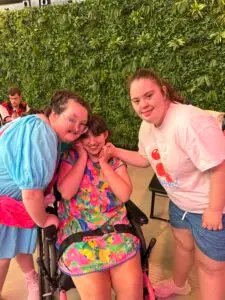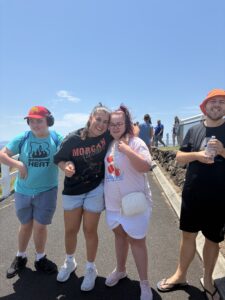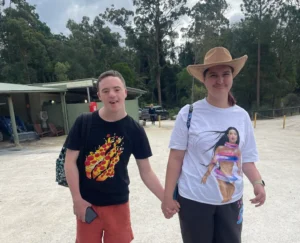
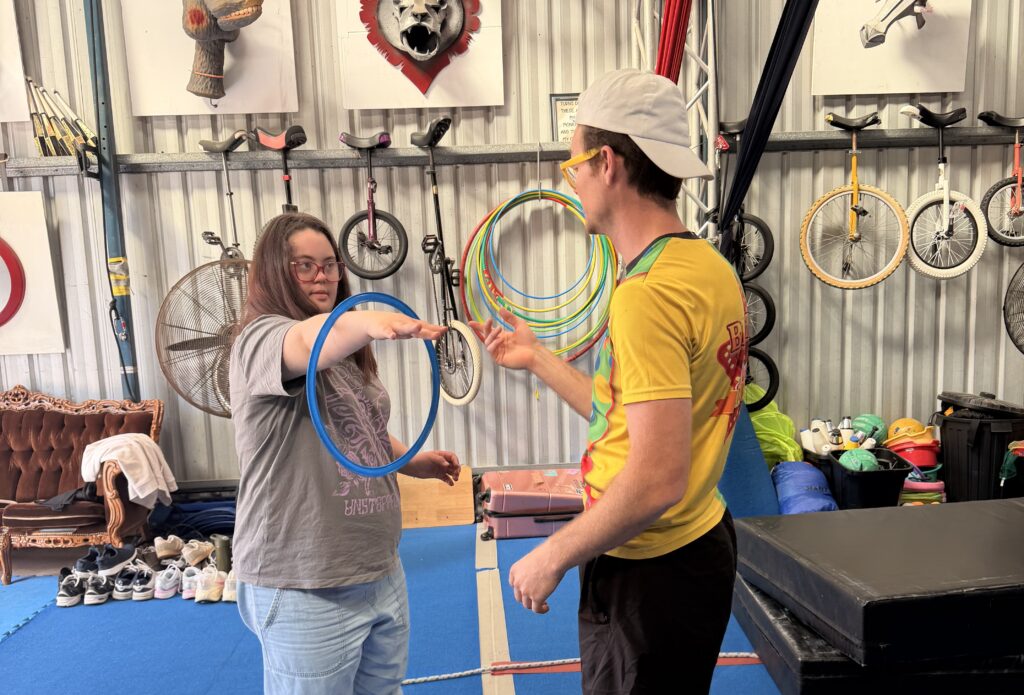
Social skills develop through experience.
Structured NDIS group programs can give people with disability regular opportunities to communicate, participate and spend time with others in a supportive environment.
This does not mean asking everyone to socialise in the same way. Some participants enjoy meeting new people and joining group conversations. Others may prefer smaller interactions or need time to feel comfortable.
A well-designed program gives each person space to participate at their own pace.
What Do We Mean by Social Skills?
Social skills help people communicate and interact with others.
They may include:
- Starting or joining a conversation
- Listening to another person
- Expressing a preference
- Asking for help
- Taking turns
- Sharing an activity
- Working as part of a group
- Recognising personal boundaries
- Managing disagreements
- Responding when plans change
Not every participant will have the same social goals.
One person may want to feel more confident speaking within a group. Another may want to meet people with similar interests. Someone else may be working towards becoming more comfortable during community activities.
The right goals depend on the individual.
Why Structure Can Make Social Participation Easier
Unstructured social situations can sometimes feel overwhelming.
People may be unsure about what is expected, who they will speak to or how long an activity will last. A structured group program can reduce some of that uncertainty.
Participants can know:
- Where the program will take place
- Who will be supporting them
- What activities are planned
- What choices are available
- When breaks can be taken
- What will happen next
Predictability can help people feel more secure. Once a participant becomes comfortable with the environment and routine, it may become easier to interact with others.
Structure should not remove choice. Instead, it should create a dependable foundation from which participants can engage in their own way.
Shared Activities Create Natural Conversation
Social interaction can feel easier when people have something to do together.
Rather than placing pressure on participants to begin a conversation, a shared activity provides a natural point of connection. This could include:
- Cooking
- Games
- Creative activities
- Community outings
- Music
- Sport or recreation
- Planning a group activity
- Visiting a local attraction
During these experiences, participants may share ideas, ask questions or help each other complete a task.
Conversation becomes part of the activity rather than the sole focus of the experience.
Shared interests can also help participants become familiar with one another over time. While friendships cannot be forced or guaranteed, regular positive experiences can create opportunities for genuine connections to develop.
Practising Communication in a Supportive Setting
Communication involves more than speaking.
Participants may communicate through speech, gestures, communication devices, visual supports or other methods.
A supportive group program should recognise and respect how each person communicates.
Participants may practise expressing their preferences, letting someone know when they need help or contributing to a group decision. They may also learn more about listening, taking turns and giving other people space to communicate.
Support workers can assist without taking control of every interaction. This gives participants room to build confidence while knowing help is available when needed.
Developing Confidence Around Other People
Confidence often grows through repeated positive experiences.
A participant may begin by observing an activity. During a future session, they might join for a short time. Eventually, they may feel comfortable contributing an idea or completing the activity alongside others.
Each of these steps represents progress.
A good program does not pressure participants to become highly social. Instead, it supports them to become more comfortable communicating and participating in ways that are meaningful to them.
This approach respects personality, communication preferences and individual support needs.
Learning to Work With Others
Group activities can also provide opportunities to cooperate.
For example, preparing a meal together may require participants to choose different tasks, share equipment and work towards a common result.
Planning an outing might involve listening to different preferences and reaching a group decision.
These activities can help participants practise:
- Patience
- Cooperation
- Problem-solving
- Flexibility
- Respect for different opinions
- Contributing to a shared goal
Support workers can help participants work through challenges as they arise.
These everyday moments can be valuable because they allow skills to develop within real interactions.
Taking Social Skills Into the Community
Social confidence can extend beyond the program environment.
Community outings give participants opportunities to practise interacting in public settings with support nearby.
Depending on the activity, this may involve ordering at a café, purchasing an item, asking a question or participating in a community event.
These experiences can help participants become familiar with different environments and expectations.
The goal is not to complete every interaction independently. It is to help the person participate, make choices and build confidence at a pace that suits them.
How Social Participation Can Relate to NDIS Goals
The NDIS recognises that eligible supports may help participants build social skills, connect with other people and increase their independence.
Depending on the participant’s plan, social and community participation goals may relate to meeting people, joining activities or becoming more involved in the local community.
The exact supports available will depend on the participant’s individual goals, plan and funding. Participants and families should confirm what their plan covers before beginning a new service.
What to Look for in an NDIS Group Program
Before choosing a program, participants and families may want to ask:
- How are activities selected?
- Can activities be adapted to individual needs?
- How does the provider support different communication styles?
- What happens if a participant needs quiet time?
- What level of support is available?
- How large is the group?
- Are participants involved in making choices?
- Does the program include community activities?
- How does the program connect with individual goals?
The answers can help determine whether the environment, activities and support approach are suitable.
Building Connections Through Rize & Thrive
Rize & Thrive is Rize Support’s weekly group program on the Gold Coast.
The program runs every Thursday and combines social activities, practical skill-building and community outings. Each activity is adapted around participants’ goals, interests and abilities.
Participants can take part at their own pace. They may join shared activities, practise communicating their preferences, explore the community and spend time with other participants.
The aim is to create an environment where people feel safe, included and supported to be themselves.
Social progress does not need to look dramatic. Sometimes it begins with joining an activity, sharing a laugh or feeling comfortable enough to return the following week. Those moments can gradually build confidence, connection and a stronger sense of belonging.
Contact Rize Support to learn more about Rize & Thrive and discuss whether the program may be suitable for you or someone you support.